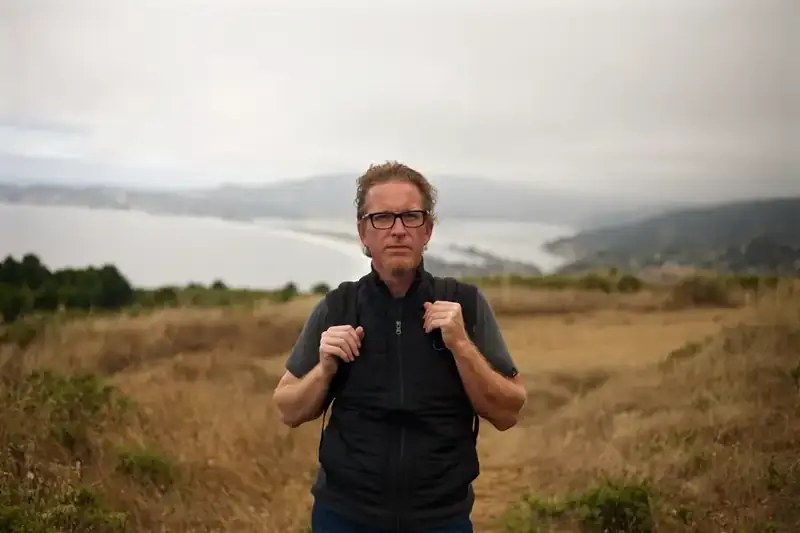
Christopher R. Kramer · 甦天星
Where I fit
Chicago made me, Japan saved me, the Bay awakened me.
1979 – 1997
Berwyn · Cicero · Park Forest
Two rooms
Park Forest, a father he never knew, a stepfather who struggled, and grandparents who held it all together. At sixteen, mixtapes in a 1985 Dodge Aries: sequencing before he knew the word.
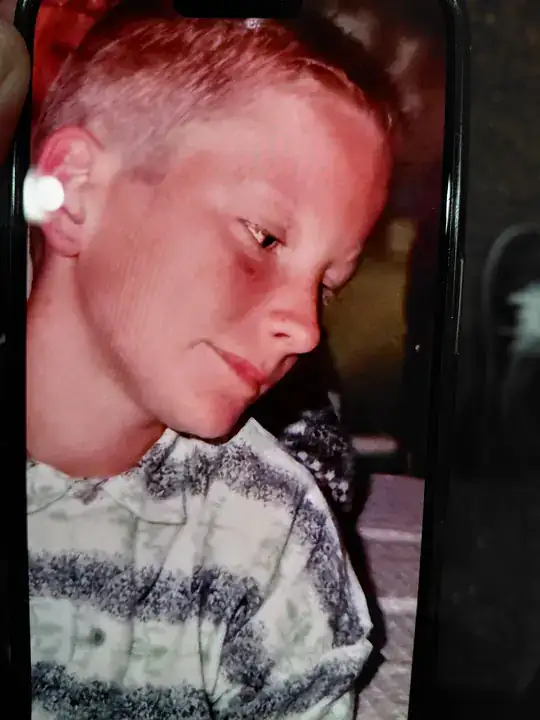
Christopher Kramer was born in Berwyn, Illinois, in July 1979, the first child of a nineteen-year-old mother. He never knew his biological father, and he says so plainly. The name he carries came from the household he grew up in, and for a long time that was a quiet fact at the edge of the picture.
In 1984 the family moved to Park Forest, a planned postwar suburb south of Chicago. Many of the families around him had come out from the city's South Side, and they brought the South Side with them: the churches, the records, the way a sentence could be a performance. He grew up inside that, a red-haired, blue-eyed boy from a blue-collar family who rapped on the school bus.
He moved between two houses. One held a stepfather who struggled, and it was the harder room. The other was his grandparents' house, with soup on the stove and a library card, and his grandfather became the father he didn't otherwise have. As a boy he also came through a few close calls that could have ended everything. He came out of them without bitterness and, years later, spent his nights designing machines that stop harm before it happens.
What he took from those two rooms was a skill: he could sit inside two systems at once without needing them to become one. At sixteen it showed up as mixtapes in a 1985 Dodge Aries, songs placed in an order that made them say something new. He was sequencing before he knew the word.
1993 – 1997
Park Forest
The hallway
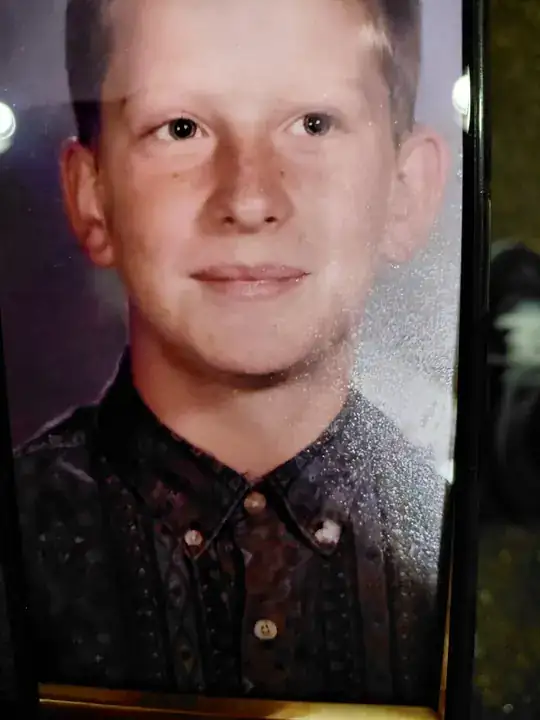
A high school in Park Forest sorted two mixed kids into different rooms. It was the first system he went through that could not read people correctly.
In junior high, on a bus route near Chicago Heights, he listened to the kids in the back seats trading raps. He went home and drew in his notebooks, and one day the drawings turned into rhymes. By high school he was freestyling around town with friends all day.
School itself was the first system he met that could not read people correctly. Two mixed-heritage kids could walk down the same hallway and be sorted into different rooms by how they looked. He noticed it, filed it, and decades later wrote a whole history of Chicago about the desks and forms that did the same thing to families like his.
1998
Carbondale, Illinois
The cypher
1998, a basement in Carbondale. A circle of people making things up out loud, and Midas Wells standing in it.
In 1998, at Southern Illinois University in Carbondale, he walked down the stairs of a basement on College Street where a DJ was playing and a cypher had already formed. He was one of the only people in the circle who was not Black. Most of the room had good vibes, and he stepped in.
Standing in that circle was Midas Wells♪, a finger drummer and producer, and that year Midas taught him to make beats from samples. Nobody introduced them and nobody booked a session. There was a circle of people making things up out loud, and they were both standing in it.
A circle has no top rung. Everyone stands the same distance from the middle. Nearly three decades later he still freestyles every day, and the circle became the shape of everything he built after it.
A circle has no top rung. Everyone stands the same distance from the middle.
1999 – 2002
Carbondale · Nakajo, Niigata
Nineteen
A father at nineteen, a major in economics and Japanese, and in 1999 a Japanese family that decided he was family.
At nineteen he became a father and, through marriage, part of a family from Niigata. In 1999 he made his first trip to Japan, and on SIU's programme in Nakajo he lived in the snow mountains, where there was no English on the signs, in the shops or from the people. The language stopped being a subject and became the condition of getting through the day.
What kept him there was not discipline. His wife's family's house felt like his grandparents' house: soup, routine, adults who were simply present. His mother-in-law encouraged him constantly. His father-in-law walked him into the mountains and showed a boy from flat Chicago that being high up and outdoors was something to love. For years a box arrived from Niigata every month, full of snacks and books, from a family that did not yet share a language with him.
In 2002 he left Carbondale with a degree in economics, a wife, a son, and the beginning of a second language. He went on to reach the top band of the Japanese proficiency test, and in 2026 he wrote the Japanese editions of his books natively.

2002 – today
Illinois · California
The day job
Twenty years inside Japanese companies taught him to put the numbers on the table and let the numbers argue.
What followed was twenty years inside Japanese companies in America: an automotive supplier, a precision-components maker, a power-electronics firm, and now a Citizen Watch Group electronics company in Silicon Valley. He sat in design meetings arguing tolerances and spring rates, interpreted every high-level meeting in both directions, and built a sales-forecasting system that a Japanese headquarters later adopted for the whole company.
The lesson he took from those rooms runs through everything since. In a Japanese company you don't push back on a senior person directly. You put the numbers on the table and let the numbers do the arguing, so nobody loses face to a spreadsheet. The structure carries the argument instead of the person.
There were lean years too, two of them, when the work was temp jobs and logistics. He insists they stay in the story. A household got kept afloat through every gap, and his son graduated with a computer science degree.
2008 – 2023
Chicago · Humboldt Park · the Hot Box
The box
Filed as white, heard as a white boy producer, playing Romani voicings he never studied. Convergence, not inheritance.
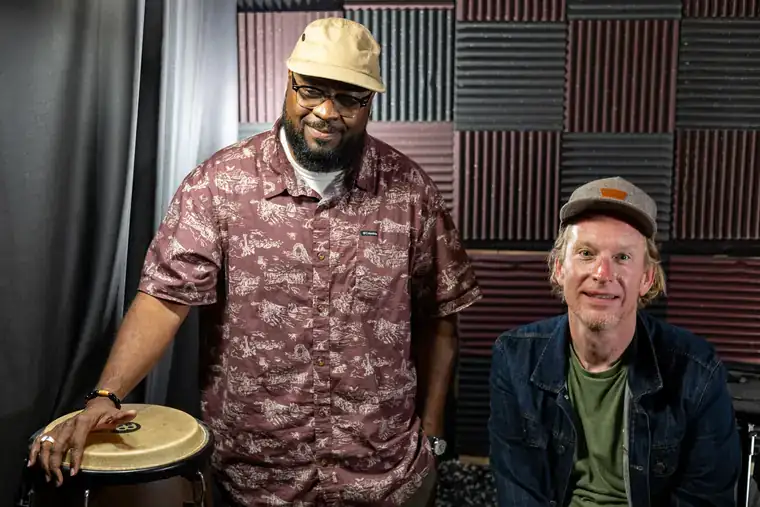
By night he made music. Around 2007 he stopped sampling other people's records and taught himself piano and bass by ear. As Simple X in Herma Puma♪ he made Synchromystic for First Word Records in the UK, and he was professional from 2010. That same year he ran into Midas Wells♪ at a friend's gig in Chicago, twelve years after the basement, and they formed Tensei♪ that week. In 2011 the Los Angeles Times premiered their remix of Bilal♪, and Tensei entered Chicago's music history on the record.
They worked in a closet studio with no ventilation, the Hot Box, turning out as many as fifteen tracks a week, and got to the office in the morning anyway. Plug Research in Los Angeles put Tensei One and Tensei Two on vinyl. Tokyo Dawn Records in Germany released Constellate, which Okayplayer named a Project of the Year and the Chicago Reader called an electronic canvas of astral soul.
On paper he was recorded as white. In the Chicago scene he was known, affectionately, as the white boy producer. And on the keys he kept playing Romani and eastern Mediterranean harmonies he had never studied. When a DNA test in 2025 showed Mediterranean and Ottoman, Mesopotamian and African roots alongside European ones, the music already knew. He calls it convergence, not inheritance: the same city that sorted people into boxes had quietly been making families like his all along.
2013 – 2025
Illinois · the Bay
The voice
After a couple of close calls with his health, he came back stronger. Around 2022 a baritenor arrived, untrained, just under four octaves: a beginner's instrument driven by a veteran's ear.
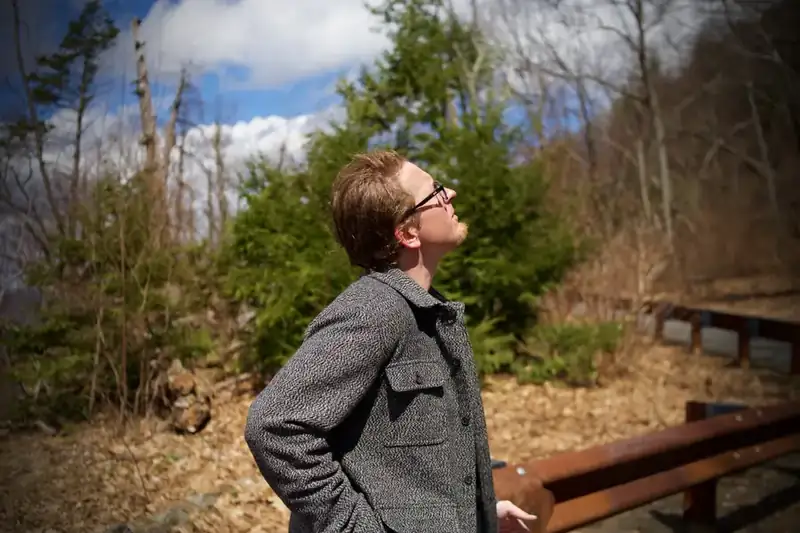
For most of his adult life, the thing that nearly stopped him was his own body. At thirty-four a torn calf threw a blood clot, and there was a scare in a doctor's office. It was the close call that changed his behaviour for good. His wife got him into the gym, the frozen dinners went, and the hikes began: Illinois first, then Santa Cruz, Half Moon Bay and Monterey. Over thirteen years he came back to the weight he was at eighteen.
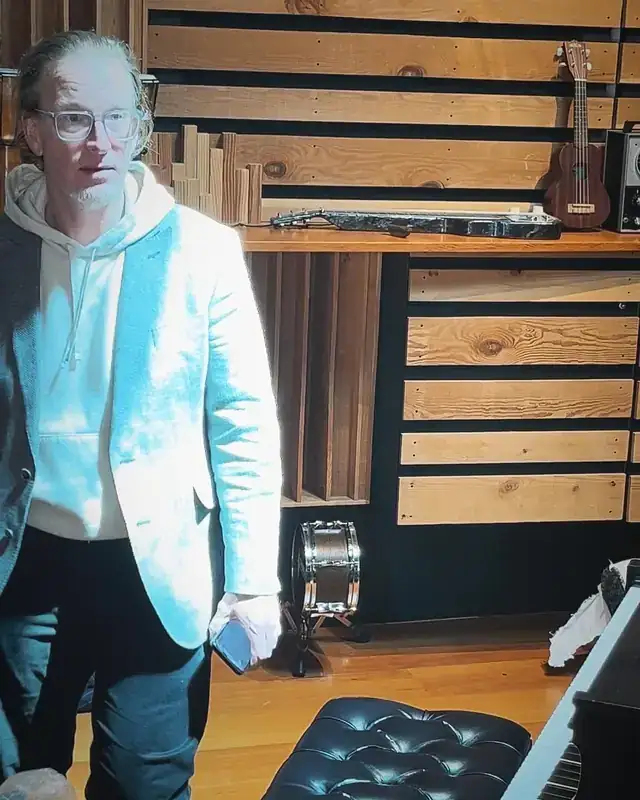
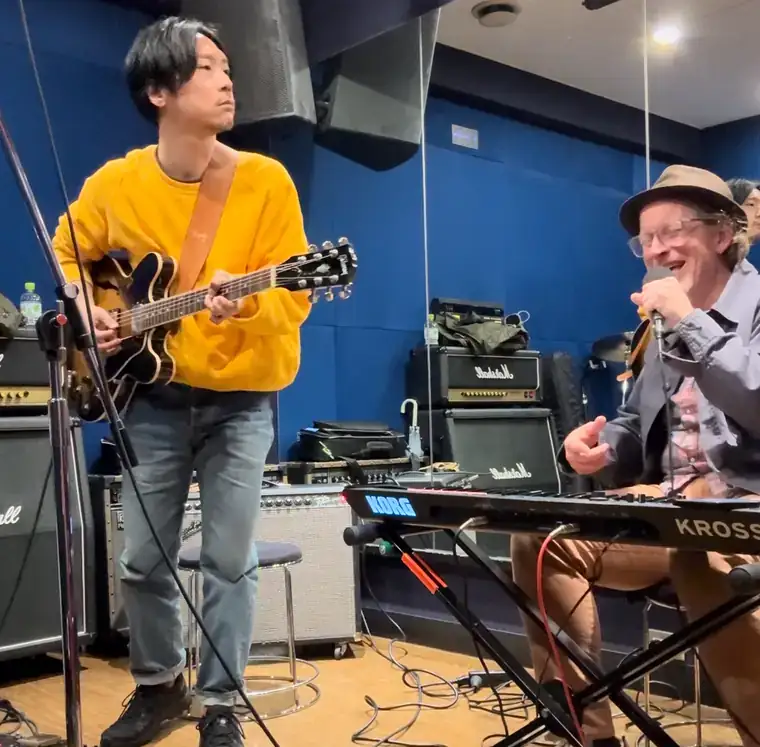
From 2017 he freestyled every day, often as vocal jazz. Then, around 2022, a voice arrived that he had not known he had: a natural baritenor, untrained, spanning nearly four octaves, landing on pitch with no correction on any recording. Harmonies came with it, already stacked. For fifteen years he had stood behind the board building a producer's ear. Now the ear had an instrument, and it took weeks instead of years.
He has sung with Bobby McFerrin♪'s Circle Songs in Berkeley, and in November 2025 he stood up and sang in front of people as himself for the first time.
2022 – 2023
Los Angeles
What it is for
To inform, inspire and awaken the people who need it, with the choice left in their hands.
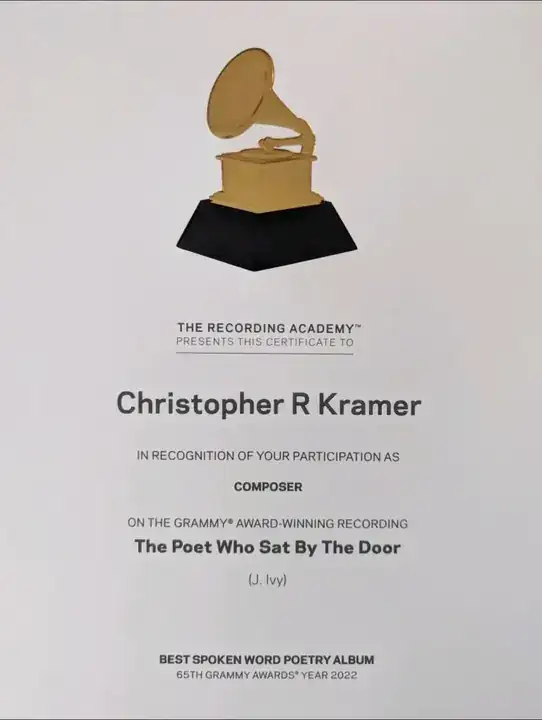
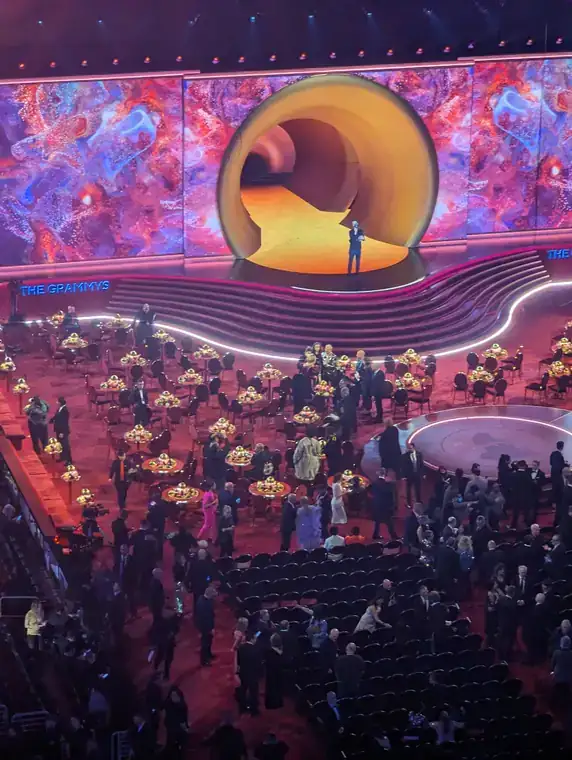
In 2022 he composed "A Mile in His Soul," track six on J. Ivy♪'s The Poet Who Sat By The Door, with Midas Wells♪ on bass. In February 2023 the album won Best Spoken Word Poetry Album at the 65th Grammy Awards, the first award ever given in that category, and the Recording Academy recognised Christopher R. Kramer as composer on the winning recording. He watched from the upper tier, zooming in on the stage with his phone.
His stated purpose for all of it is simple: to inform, to inspire and to awaken the people the work is for, and to leave the choice to them.
“I have all these ideas, and I need help to bring them to life.”
2023 –
The Bay Area
No persona
After the Grammy came offers that wanted him to become someone else. There are a few bad apples in every orchard. He said no, and built Son Tensei himself.
After the Grammy, the offers came, and every one of them wanted him to become somebody else. There are a few bad apples in every orchard, and he met some of them. He didn't need to be reshaped. He had a voice, a catalogue, twenty years of technical work, a family and a career, so there was nothing to negotiate.
So he built it himself. He registered GoOutsideOffline LLC in California and became Son Tensei♪, 甦天星: the heaven star, revived. The same star, with no partner, no persona and no permission needed. Introduction: Son Is Different followed in 2025 and Virtual Island in 2026, sung and rapped in English and Japanese, about screens and distance, work and dignity, fathers and grandmothers, and what a person owes the people coming after.
always
Shrine · temple · synagogue · church
Faith
He has believed in God since he was a boy, taught by no church. Today he is spiritual, at home in a shrine, a temple, a synagogue or a church.
He believed in God as a boy, before any church taught him to. The churchy households of Park Forest gave him gospel, call and response, and the idea that a room full of voices could lift something heavy.
Today he is a spiritual person rather than a denominational one. He has never felt out of place in a Shinto shrine, a Buddhist temple, a synagogue or a church, and he still observes the formal protocols at shrines. He puts his faith in two short sentences: he loves nature, and he loves God. His book Love Our Mother, Love The Children names the principle that follows from it, Stewardism: the S-curve of care over the J-curve of endless extraction.
2025 –
California → Japan
Books and inventions
He set down the MPC, the mic and the keyboards to write books and build inventions. He still makes songs, now for the joy of it.
Then he set the MPC, the microphone and the keyboards down on the table, not away, and picked up a pen and a notebook. Out of twenty years of watching data settle arguments that rank could not, he designed Harmonic Path Logic, a patent-pending governing layer for AI systems and machines, filed in 2026 with himself as sole inventor. Its principle is a gate in the path, not a model: bound what a system may do, hold irreversible actions for a human, and write down every decision where anyone can read it.
Around it sits a notebook of inventions for robots, lighting, power and waste, and a shelf of books: Love Our Mother, Love The Children, the memoir Chicago Made Me, Japan Saved Me, The Bay Awakened Me, The Hot Box, and Two Rivers, the history of Chicago music on the other side of this site. Each one is written in English and in Japanese.
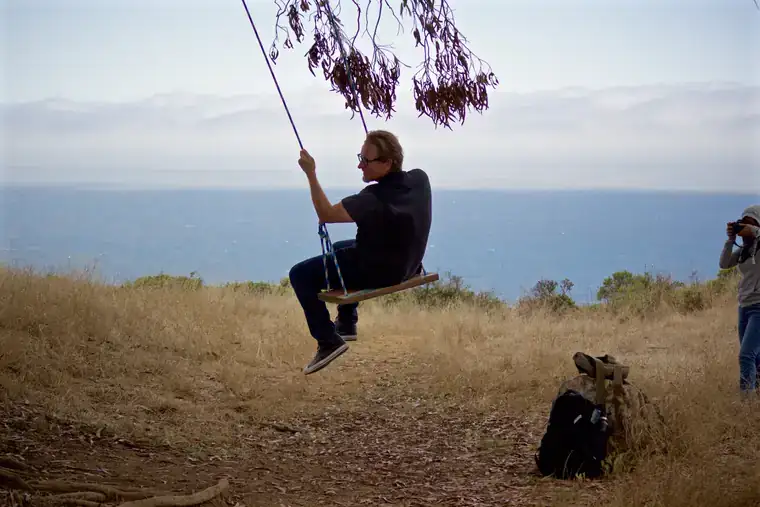
He still makes songs, every day, now for the joy of it. He is moving to Japan, the country he has been walking into since he was nineteen, with his own work under his own name. In 1998 a circle of strangers in a Carbondale basement made room for him. Everything since has grown from that.
Work with him
Work with him
Music supervisors, publishers, producers, streamers, patent counsel, pilot partners and people who value work that is honest about its limits: the catalogue, the books, the screen projects and Harmonic Path Logic are all available for licensing and partnership.